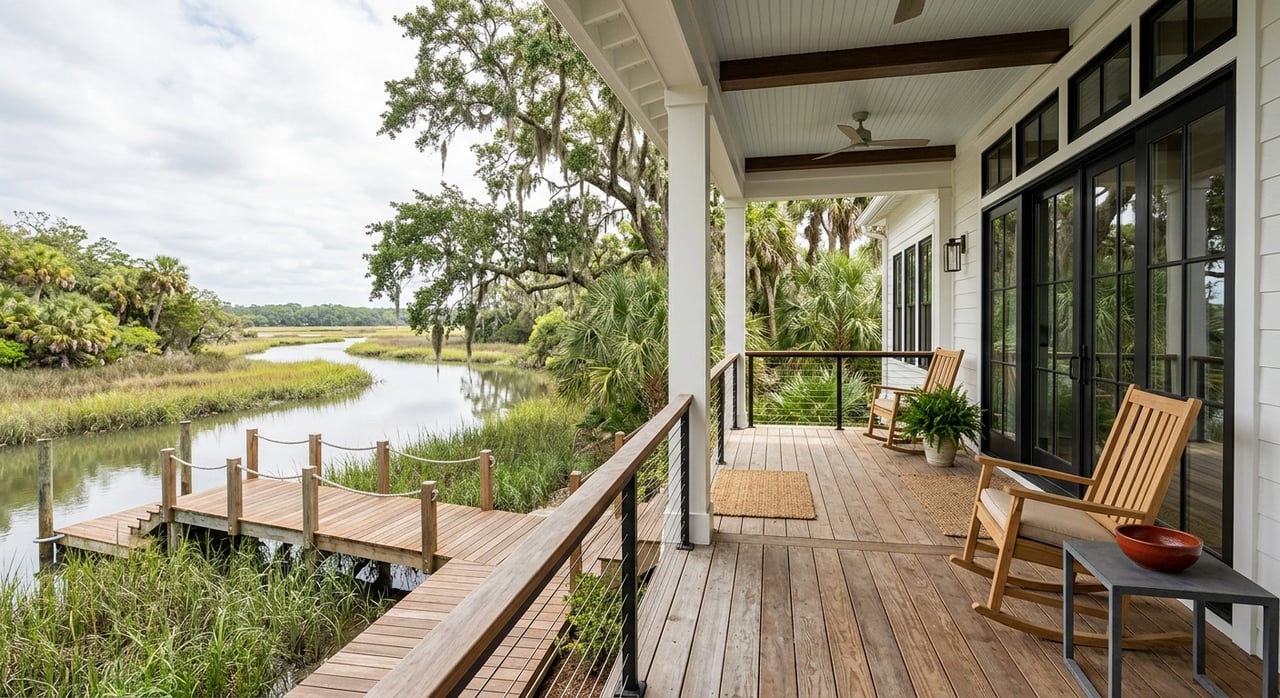
A second home on Hilton Head Island can look perfect online and still be the wrong fit for how you actually plan to use it. On a barrier island, details like beach access, rental rules, storm planning, and community fees can shape your ownership experience just as much as the home itself. If you are thinking about buying a second home here, you need more than a pretty view. You need a clear plan for how you will live in, manage, and enjoy the property. Let’s dive in.
Why intended use matters first
When you buy a second home on Hilton Head Island, your intended use should guide nearly every decision. A home for quiet seasonal stays may not be the right match for part-time rental income, frequent guest visits, or a more hands-off ownership style.
That matters on Hilton Head because communities can function very differently. Beach access, gate entry, rental flexibility, and owner support services vary from one area to another. In many cases, the best second home is not the one closest to the sand. It is the one that matches your goals.
Understand Hilton Head’s beach access reality
Hilton Head Island’s setting is part of the draw, but it also comes with practical rules. The Town says the beach is public from the ocean to the high-water mark, while access points are often private.
That means two homes with similar beach proximity may offer very different day-to-day convenience. One property may have simple, direct access through its community, while another may require more planning for you and your guests.
Beach parking matters too, especially if you will not live on the island full-time. The Town says resident beach parking permits are only available to Town residents, are limited to two vehicles per address, and are not available to properties used as short-term rentals.
Visitors also need to plan ahead. The Town says most beach parks charge parking fees, with Coligny Beach Park as the exception, and peak-season parking fees run from March 1 through September 7.
Compare community types carefully
Hilton Head Island offers several ownership styles, and each one supports a different kind of second-home lifestyle. Before you fall in love with a home, it helps to understand what the surrounding community allows and how it operates.
Sea Pines for resort-style ownership
Sea Pines is a gated resort community with controlled access. Sea Pines says a gate pass is required to enter by car, bicycle, or foot, and select homes and villas have beach access.
For second-home buyers, Sea Pines can appeal if you want a resort-oriented setting with support systems already in place. Sea Pines also says non-guests can use the complimentary beach shuttle, rentals are allowed with an annual rental fee, and Sea Pines Security offers absentee owner house checks.
Palmetto Dunes for flexible part-time use
Palmetto Dunes is a residential resort community with 2,000 acres, three miles of beachfront, leisure paths, and an 11-mile lagoon. The POA notes that it includes both year-round and part-time residents.
If you plan to use your home part of the year and rent it at other times, Palmetto Dunes may fit that strategy. The POA says short-term rentals of fewer than 30 days must comply with the Town ordinance and require both a Town permit and business license.
Hilton Head Plantation for longer-term use
Hilton Head Plantation is a large gated residential community with nearly 4,000 acres, about 4,230 homes, a two-mile walking beach, parks, golf courses, and association-maintained stormwater and roadway systems.
Its fact sheet also highlights an important restriction for many second-home buyers. Properties under Class A covenants may not be rented for less than six months, which makes this community a better fit if you want personal use or a longer-term ownership pattern rather than an active vacation-rental plan.
Long Cove Club for a private club setting
Long Cove Club describes itself as a private residential club with golf, a deep-water marina, tennis, pickleball, bocce, and a clubhouse. For some buyers, that quieter, membership-oriented environment is the main goal.
If your ideal second home is more about private amenities and a club atmosphere than short-term rental flexibility, this style of community may be worth a closer look.
Know the short-term rental rules
If you plan to rent your second home for fewer than 30 days at a time, the Town of Hilton Head Island’s short-term rental ordinance applies. The Town says a permit and business license are required.
That is only part of the picture, though. You also need to confirm whether the specific community allows the use you want. Sea Pines says rentals are allowed, Palmetto Dunes has an active short-term-rental framework, and Hilton Head Plantation limits many properties to rentals of six months or longer under Class A covenants.
This is why second-home buying on Hilton Head requires community-level due diligence, not just island-wide research. A home can be ideal on paper and still conflict with the rules that apply once you own it.
Budget beyond the purchase price
Second-home buyers often focus on price first, but annual carrying costs can tell you much more about long-term fit. On Hilton Head Island, taxes, association costs, insurance needs, and storm planning all deserve close attention.
In South Carolina, Beaufort County says property tax cost is driven by market value, the assessment ratio, and the millage rate. The county also says owner-occupied primary residences are generally assessed at 4%, while secondary residences are assessed at 6%, and millage varies by tax district.
That difference matters if you are comparing a primary home purchase to a second-home purchase. The final bill can also vary based on the tax district and local budget needs.
Association or regime costs are another key part of the equation. Hilton Head Plantation’s fact sheet lists annual assessments, a repair-and-replacement fund, a weather casualty fund, and a capital improvement transfer fee, which shows why it is so important to review what dues cover and how reserves are funded.
Plan for flood and storm realities
Owning on a barrier island comes with extra planning. Flood risk, storm preparation, and periods when the home may sit vacant should all be part of your purchase decision.
The Town of Hilton Head Island provides a flood hazard search and explains flood zones. The Town also notes that floodplain staff can help with flood depth data, coastal erosion hazards, and historical flooding.
Flood insurance also deserves attention early in the process. FEMA says flood damage is not normally covered by a homeowners policy, and flood insurance is typically separate.
Storm timing is important too. The Town says the official beach season runs from April 1 through September 30, while Atlantic hurricane season runs from June 1 through November 30. In other words, the months when many owners most want to use the home overlap with the months that require the most storm awareness.
If you will be away part of the year, your storm plan needs to be practical. The Town advises owners to have an evacuation plan, know their route, secure storm shutters or plywood, move outdoor items inside, and evacuate immediately if ordered.
Think through guest use and day-to-day logistics
A second home should feel easy to enjoy, not complicated every time family visits. That is why guest access, parking, and house management are worth discussing before you buy.
Sea Pines offers a good example of how support services can shape ownership. Sea Pines Living notes that absentee owner house checks, a seasonal trolley, and property-owner ID cards can support convenience for owners who are not on-site year-round.
Travel logistics can also affect how often you use the home. Hilton Head Island Airport is centrally located mid-island and reports year-round American Airlines service, along with seasonal daily Delta and United options, plus on-site parking and transportation services.
Even beach rules can influence how you host. The Town prohibits alcohol, glass, overnight belongings, fires, digging holes deeper than 12 inches, and several other activities on the beach, and says violations can lead to fines and court costs of up to $1,092.50 per offense.
Questions to answer before you buy
Before you move forward, it helps to be honest about how you want this home to function. A clear plan can save you from buying into rules, costs, or logistics that do not match your lifestyle.
Ask yourself:
- Do you want a resort community, a club community, or a more owner-focused residential setting?
- Will you keep the home for personal use only, or do you want the option to rent it?
- How important are absentee owner services and on-island support?
- What will the full annual cost look like after taxes, dues, flood coverage, and storm preparation?
- How easy will beach access, parking, and guest visits be in real life?
The answers can point you toward the right fit much faster than photos alone ever will.
Buying with a local strategy
Buying a second home on Hilton Head Island is not just about finding a beautiful property. It is about matching your budget, lifestyle, and ownership goals to the right community and the right rules.
That is where local guidance becomes especially valuable. When you understand how access, rental restrictions, carrying costs, and storm planning work together, you can buy with more confidence and fewer surprises.
If you are considering a second home on Hilton Head Island, Michele Niles can help you evaluate communities, compare ownership options, and build a plan that fits the way you want to use your Lowcountry home.
FAQs
What should I know about second-home taxes on Hilton Head Island?
- Beaufort County says owner-occupied primary residences are generally assessed at 4%, while secondary residences are generally assessed at 6%, with millage varying by tax district.
Can I use my Hilton Head Island second home as a short-term rental?
- It depends on both Town rules and community covenants. The Town says rentals of fewer than 30 days require a permit and business license, and some communities have additional restrictions.
Are all Hilton Head Island beach access points public?
- No. The Town says the beach is public from the ocean to the high-water mark, but access points are often private.
Is flood insurance included in a standard homeowners policy for Hilton Head Island homes?
- No. FEMA says flood damage is not normally covered by a homeowners policy, so flood insurance is typically separate.
Which Hilton Head Island communities fit different second-home goals?
- Sea Pines can suit resort-style ownership, Palmetto Dunes can fit flexible part-time use, Hilton Head Plantation can suit longer-term or personal-use ownership, and Long Cove Club can appeal to buyers seeking a private club setting.
What storm planning should second-home owners on Hilton Head Island consider?
- The Town advises owners to have an evacuation plan, know their route, secure shutters or plywood, move outdoor items inside, and evacuate immediately if ordered.