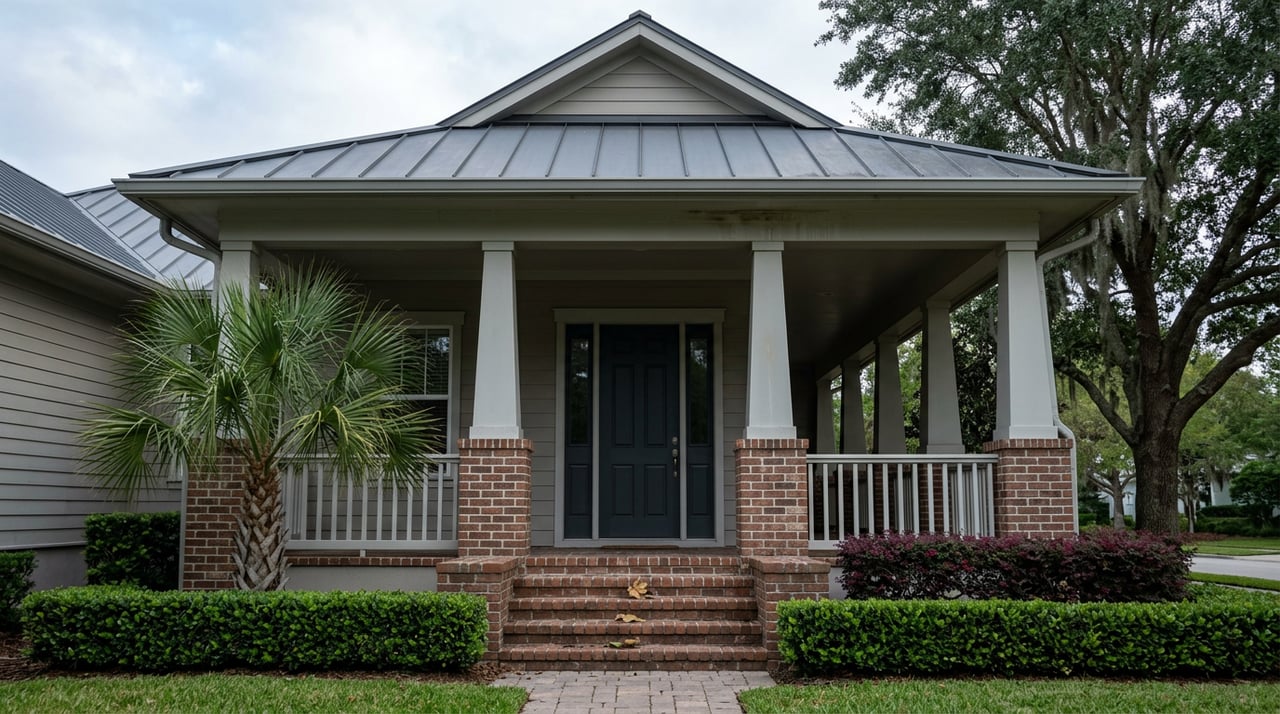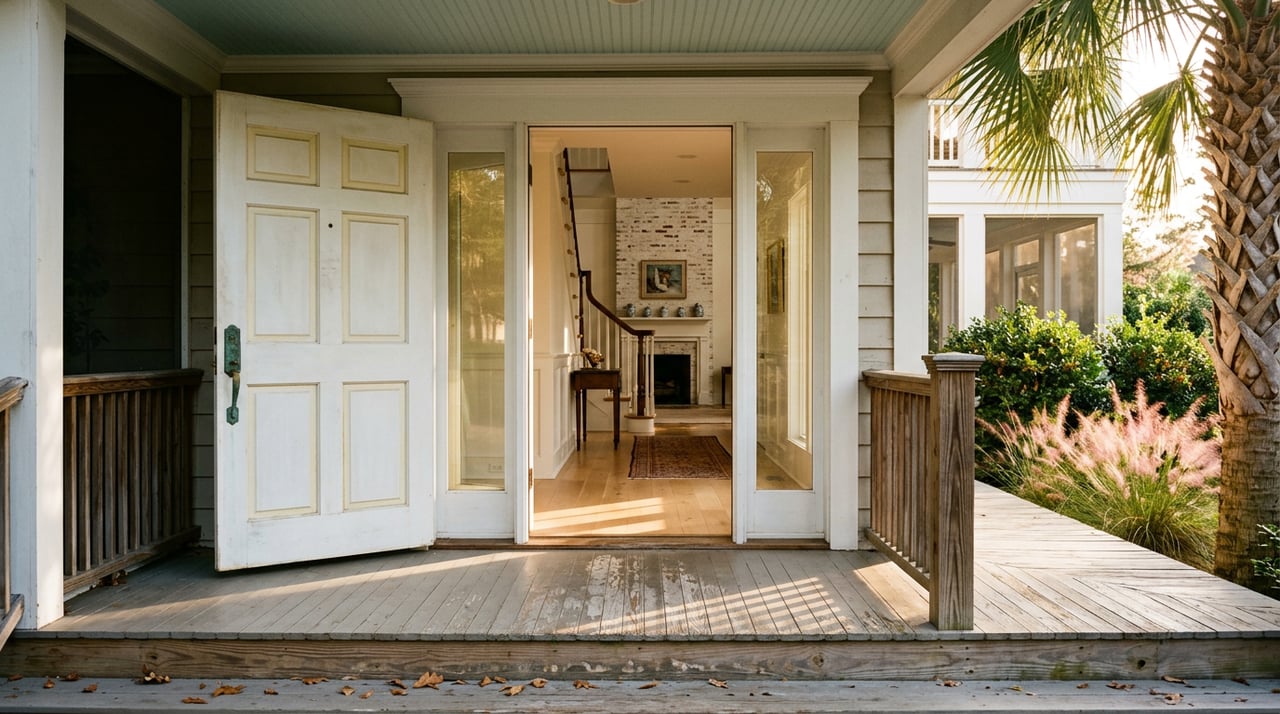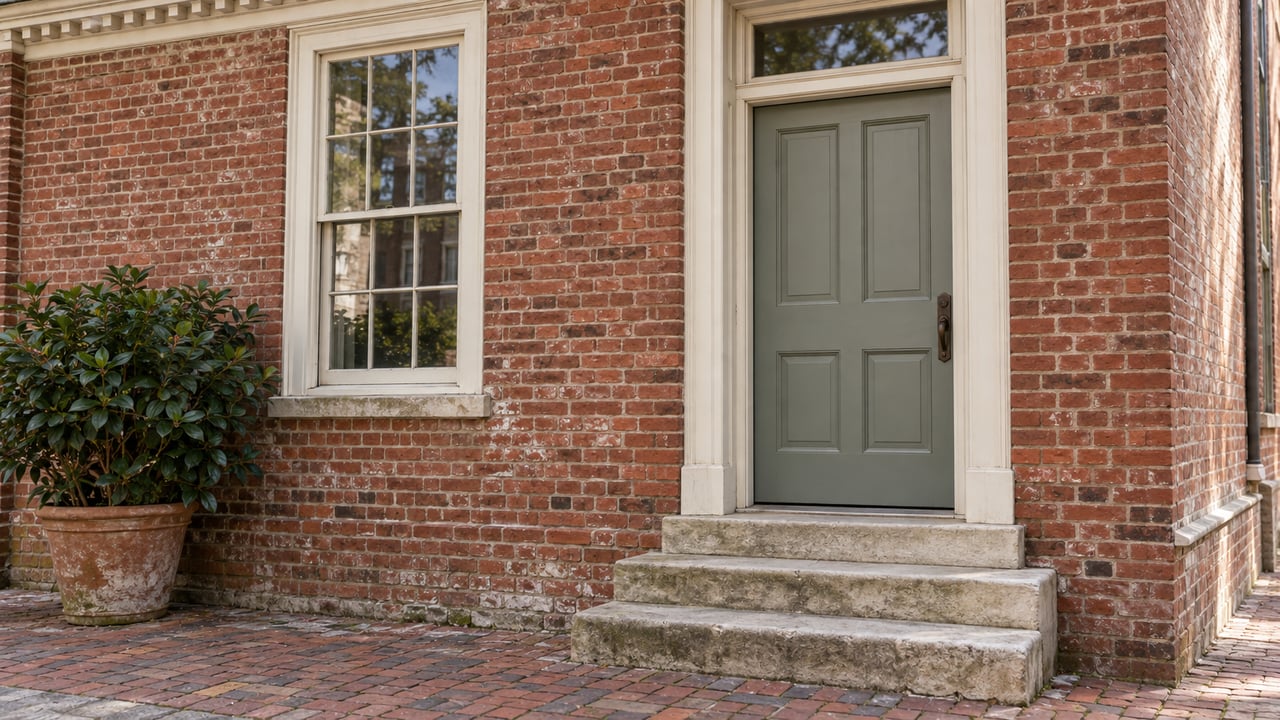
Walk two blocks in Savannah's Victorian District and you can find a pair of three-bedroom row houses built the same decade, finished to a similar standard, sitting two blocks apart. One lists for meaningfully more than the other. Ask a buyer's agent why, and the answer usually has nothing to do with the kitchen counters or the roofline. It has to do with a piece of paper the seller either has or doesn't.
That piece of paper is a short-term vacation rental certificate, and in Savannah's historic core it has become one of the more consequential line items in a purchase, whether or not you ever plan to run an Airbnb.
The cap nobody mentions at the open house
Savannah has allowed whole-home short-term rentals inside its Downtown Historic, Victorian, and Streetcar (formerly Mid-City) historic districts since the city adopted its short-term vacation rental ordinance in 2017. The catch was built into the ordinance from the start: non-owner-occupied STVR certificates are capped at 20 percent of residential parcels in each ward, a ward being roughly a historic block plus its surrounding streets. Owner-occupied properties are exempt from the count entirely, provided the owner's primary residence sits on the same parcel as the rental unit.
That 20 percent ceiling sat quietly in the code for years while supply caught up to demand. It hasn't sat quietly this year. As of 2026, every ward in the Downtown and Victorian Historic Districts has hit its cap for non-owner-occupied certificates. New applicants in those wards don't get a certificate. They get added to a waiting list the city maintains on a first-come, first-served basis, with no published timeline for when an opening might occur.
For a buyer who assumed they could close on a Historic District house and list it on a booking platform within the month, that waiting list is the first real friction point in the deal.
The six-month window that decides who gets in
The ordinance does leave one door open, and it's narrow. STVR certificates are non-transferable under the city code. A seller's certificate does not pass to a buyer at closing the way a survey or a termite bond might. But if a property already carries a pre-existing certificate and the new owner files their own application within six months of the title transfer, that application cannot be denied on ward-cap grounds, even if the ward is sitting well above its 20 percent ceiling.
Miss that six-month window and the buyer is treated like any other new applicant. They join the same waitlist as someone who bought a house with no rental history at all.
This is the mechanism that actually prices these homes. A property with an active, grandfathered certificate lets a buyer step into rental income immediately, without years on a list with no set end date. A nearly identical property without one hands the buyer a coin flip: maybe the ward opens up, maybe it doesn't, and there's no way to know on closing day.
Three districts, three different rules
The STVR overlay covers three historic districts, and the rules aren't uniform across them.
| District | STVR rule | What it means for a buyer |
|---|---|---|
| Downtown Historic District | 20% cap on non-owner-occupied certificates per ward | Every ward has reached the cap; new applicants go on a waitlist |
| Victorian District | Same 20% per-ward cap | Same waitlist dynamic as Downtown |
| Streetcar (Mid-City) Historic District | Parcels zoned TN-2 must have two or more dwelling units, at least one owner-occupied | Rules out a straightforward single-family STVR play entirely |
Outside these three districts, whole-home STVRs are only permitted in a handful of commercial and agricultural zones. Standard residential zoning south of Victory Drive or on the Southside doesn't qualify at all, regardless of what a listing description implies.
What the premium looks like in real dollars
Ask people who work these transactions regularly and they'll describe a consistent pattern: a parcel with an active, grandfathered certificate commands somewhere in the range of 10 to 20 percent more than a comparable parcel without one, purely because the buyer can step into the rental income without the multi-year uncertainty of a waitlist.
The reverse also holds, and it's worth understanding before you fall in love with a listing's projected income. Investors who track Savannah's STR exits describe cases where a Historic District cottage priced at $340,000 to $380,000 on the strength of its rental income has settled closer to $240,000 once that certificate was gone, whether through a lapsed renewal, a missed six-month window, or a zoning determination that didn't go the owner's way. The house didn't change. The income stream attached to it did, and the price followed.
That gap is the clearest evidence that the historic architecture itself isn't what's setting these prices at the margin. The permit is.
What to ask before you write an offer
If you're comparing Historic District or Victorian District properties and rental income is part of your math, a few questions belong in your due diligence before the listing agreement, not after closing.
Ask whether the STVR certificate is active and in good standing, not just historically issued. Certificates expire annually and require renewal, so a certificate that lapsed two years ago doesn't help you.
Ask which ward the parcel sits in and whether that ward has room under the 20 percent cap, since the answer varies block to block even within the same district.
Ask your closing attorney to confirm the six-month clock starts at title transfer, not at your offer date or your inspection period, so you know exactly how much runway you have to file.
If the plan involves owner-occupancy to sidestep the cap altogether, confirm what "owner-occupied" actually requires under the ordinance, since the exemption depends on the owner's primary residence sharing the same parcel ID as the rental unit.
None of this replaces a standard home inspection or a title search. It sits alongside them, and in this particular market it can matter as much to your final number as either one.
A few questions worth asking
Does an existing STVR certificate transfer automatically when a Historic District house sells? No. Certificates are non-transferable under the city code. The new owner has to file their own application, though filing within six months of the title transfer protects that application from being denied on ward-cap grounds.
What happens if my ward has already hit the 20 percent cap and I miss the six-month window? You go on the same waiting list as any new applicant, maintained first-come, first-served, with the city reaching out when an opening occurs in that ward.
Is there anywhere in Savannah's historic districts where a buyer can get a new certificate without a wait? Owner-occupied properties are exempt from the cap entirely. Outside the three historic overlay districts, whole-home STVRs are only permitted in specific commercial and agricultural zones, not in standard residential areas.
A Historic District purchase in Savannah is still, first and foremost, a decision about a house you'll live in or hold. But if part of your plan involves rental income, the certificate attached to that parcel deserves the same scrutiny you'd give the roof or the foundation. It's the one piece of the deal that doesn't show up in a home inspection and can move your price by tens of thousands of dollars either direction.
If you're weighing a Historic District or Victorian District property in Savannah and want to know exactly where a specific ward stands before you write an offer, Michele Niles can help you sort out what the certificate is actually worth before you commit to a number.